
Technical Overview & Brand Interchangeability
A Comprehensive Engineering Analysis of Sensor Architecture, Standards Compliance, Hardware Reliability, and Drop-In Replacement Capability for Incumbent Vision Systems.
Executive Summary
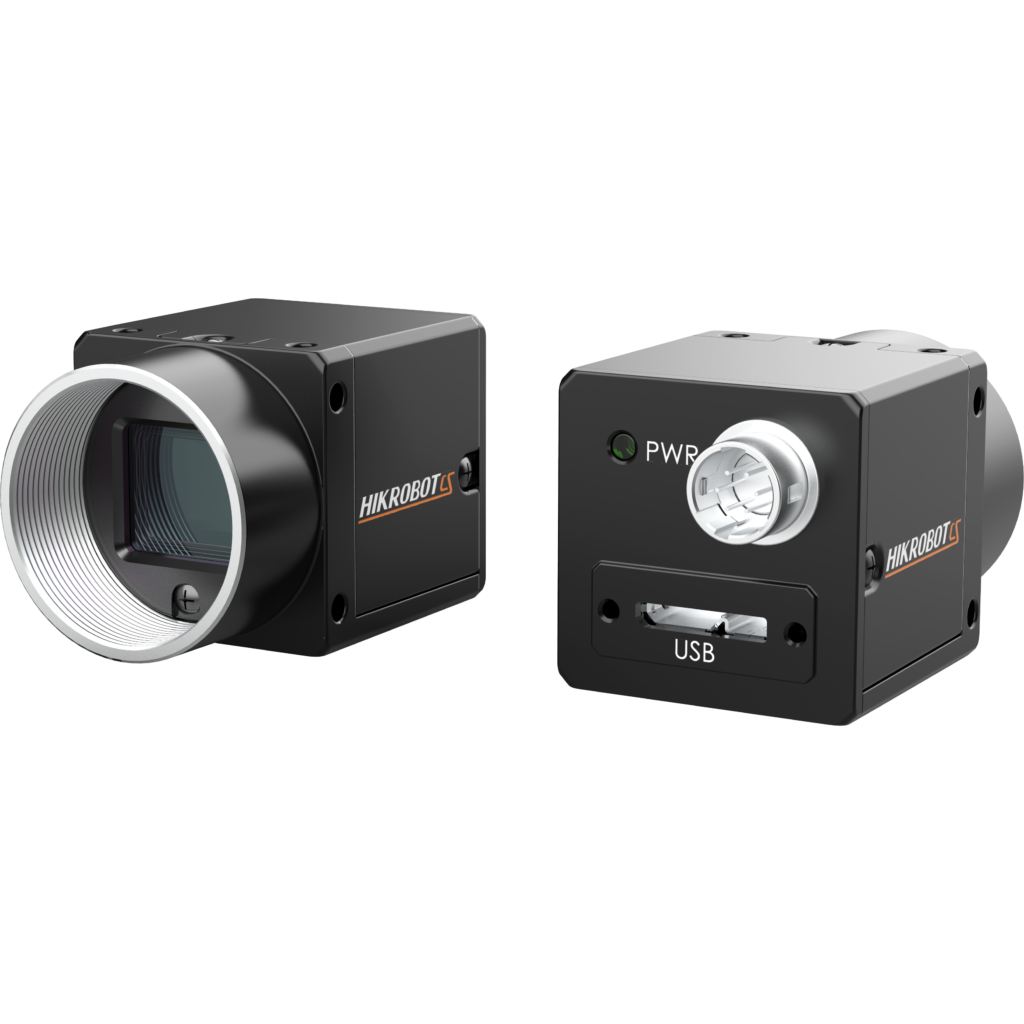
The global industrial machine vision landscape is experiencing a rapid architectural transition. System integrators and original equipment manufacturers (OEMs) face mounting pressure to reduce bill-of-materials (BOM) costs without compromising image fidelity, mechanical durability, or software compatibility. Hikrobot has established itself as a premier provider of industrial area scan cameras, offering a complete lineup spanning from 0.3 MP entry-level sensors to ultra-high-resolution 604 MP inspection powerhouses.
Engineered strictly in compliance with EMVA 1288, GenICam, GigE Vision, and USB3 Vision standards, Hikrobot area scan cameras serve as direct 1:1 functional, electrical, and mechanical drop-in replacements for traditional legacy brands such as Basler, FLIR, Allied Vision, Cognex, and Baumer. By combining state-of-the-art CMOS sensors, 100-level cleanroom optical packaging, robust onboard FPGA processing, and ISO-certified manufacturing, Hikrobot delivers equal or superior performance at a significantly lower commercial tier.
Portfolio Architecture & Series Breakdown
Hikrobot segments its area scan camera portfolio into specialised hardware families engineered to target specific application demands, environmental constraints, and resolution thresholds.
| Camera Series | Resolution Range | Primary Data Interfaces | Sensor Technology & Shutter | Key Architectural Features & Ideal Applications |
|---|---|---|---|---|
| CL Series (Universal) | 0.4 MP to 20 MP | GigE, USB 3.0 | Mostly Rolling Shutter, low power CMOS | Cost-optimised, lightweight chassis for general presence/absence, sorting, and standard code reading. |
| CS Series (2nd Gen Standard) | 0.4 MP to 20 MP | GigE, USB 3.0 | Global Shutter (Sony Pregius / Gpixel) | Excellent image quality, high dynamic range, low noise floor, optimised power dissipation. |
| CH Series (High-End Ultra-HD) | 4 MP to 604 MP | GigE, 10GigE, USB3, Camera Link, CXP-6/12, XoFLink | High-precision Global Shutter CMOS | Built-in ISP algorithms, multi-interface flexibility, assembled in Class 100 cleanrooms for FPD and semiconductor inspection. |
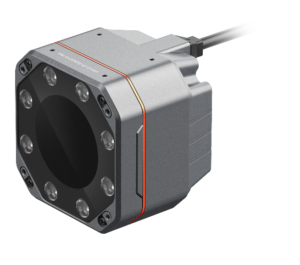
| CT Series (Industrial IP67) | 2 MP to 12 MP | GigE (PoE), BASE / PRO / MAX | Global Shutter CMOS | Fully sealed IP67 housing, integrated liquid lens control, multi-spectral fusion, onboard lighting driver for harsh environments. |
| CB Series (Board-Level) | 0.4 MP to 12 MP | GigE, USB 3.0 | Global & Rolling Shutter CMOS | Single or stacked multi-board configurations, bare-board, M12, or C-mount options for embedded OEM machinery. |
Direct Drop-In Interchangeability & Standards Compliance
A primary criteria when evaluating alternative machine vision vendors is the friction involved in replacing incumbent hardware. Hikrobot cameras are engineered from the ground up to achieve complete interoperability with existing hardware and software infrastructure.
1. Mechanical & Optical Interoperability
Hikrobot area scan cameras utilise industry-standard optical lens mounts and physical mounting dimensions:
- Optical Mounts: Full support for C-Mount, CS-Mount, F-Mount, M42, M58, and M72 mounts with standardised flange focal distances, ensuring seamless reuse of existing optical assemblies.
- Form Factor Compatibility: The CS and CL series feature standard 29 mm × 29 mm and 38 mm × 38 mm front-face footprints with identical mounting hole patterns (M2/M3) matching industry norms, allowing direct mechanical swaps without modifying mounting brackets.
2. Electrical & I/O Standardisation
- Standard Industrial Pinouts: Integrated 12-pin Hirose / P10 industrial connectors maintain identical pin configurations for opto-isolated hardware line triggers, strobe outputs, and RS-232/485 serial communication.
- Power over Ethernet (PoE): Complete compliance with IEEE 802.3af PoE allows single-cable power and data delivery over 100-meter Cat5e/Cat6 runs, eliminating rewiring requirements during upgrades.
3. Software Architecture & Framework Compatibility
Software lock-in is avoided through full adherence to global vision standards:
- GenICam & Vision Standards: Hikrobot cameras conform strictly to GigE Vision V2.0, USB3 Vision, and CoaXPress standards. Any software platform supporting GenICam can control Hikrobot cameras natively without proprietary drivers.
- Third-Party Software Plug-and-Play: Fully validated support for standard third-party visual processing engines including MVTec HALCON, OpenCV, Cognex VisionPro, NI LabVIEW, and Hikrobot VisionMaster.
- Universal SDK: The Hikrobot MVS (Machine Vision Software) SDK provides uniform C, C++, C#, and Python API wrappers for Windows and Linux OS environments, enabling straightforward migration of custom code.
Manufacturing Excellence, Quality Control & Reliability
To compete directly with established European, American, and Japanese camera suppliers, Hikrobot maintains strict manufacturing control and optical assembly procedures.
- Class 100 Cleanroom Optical Packaging: High-resolution sensors (such as the CH Series up to 604 MP) are assembled in Class 100 (ISO 5) cleanroom environments. This eliminates micro-dust contamination on the sensor glass cover, preventing dark spots or optical artifacts in high-magnification semiconductor and optical display (FPD) inspections.
- ISO Certification & Environmental Testing: Production lines are certified under ISO 9001 (Quality Management), ISO 14001 (Environmental), ISO 45001 (Occupational Health), and ISO 20000 (IT Service). Every camera undergoes automated thermal cycling, continuous Burn-In testing, and intensive Electromagnetic Compatibility (EMC) testing prior to distribution.
- Thermal Dissipation Architecture: Engineered with high-efficiency passive thermal dissipation channels and low-power circuit topologies, ensuring continuous sensor performance, minimal dark current noise, and low thermal drift over 24/7 operation.
Onboard FPGA Processing & Advanced Features
Beyond basic image capture, Hikrobot area scan cameras integrate powerful onboard FPGA chips that offload image pre-processing tasks directly from the host computer CPU.
- Sequencer Functionality: Enables rapid hardware-driven switching of exposure time, gain, light channel, and ROI parameters across sequential frames. Parameter switching occurs onboard instantly, bypassing PC latencies.
- Trigger-over-Ethernet (ToE): Provides precise, multi-camera synchronous image acquisition over Ethernet with trigger jitter control reaching 10-nanosecond precision levels.
- Hardware Frame Grabber Acceleration: Hikrobot GigE and CoaXPress frame grabbers incorporate proprietary FPGA unpacking logic. By handling packet reconstruction directly on the PCI Express card, host CPU utilisation drops near zero percent while guaranteeing zero frame loss.
- Onboard ISP Tools: Integrated real-time spatial noise reduction, static/dynamic defect pixel correction, gamma correction, custom 3D Look-Up Tables (LUT), shading correction, and onboard JPEG compression.
Comparative Benchmark: Hikrobot vs. Legacy Incumbents
When evaluated against incumbent offerings from Basler, FLIR, and Allied Vision, Hikrobot area scan cameras demonstrate complete technical parity while providing distinct hardware and cost advantages.
| Feature / Parameter | Hikrobot CS / CH / CT Series | Legacy European / US Brands | Technical Advantage & Business Impact |
|---|---|---|---|
| Standard Compliance | GigE Vision, USB3 Vision, CXP-12, GenICam | GigE Vision, USB3 Vision, CXP, GenICam | Equal: Complete drop-in software compatibility across all environments. |
| Sensor Portfolio | 0.3 MP up to 604 MP (Area) | 0.3 MP up to ~151 MP | Hikrobot Advantage: Broader dynamic range and ultra-high resolution capabilities. |
| Enclosed IP67 Protection | CT Series (Integrated optics, lights, liquid lens) | Requires external third-party IP67 housings | Hikrobot Advantage: Lower system footprint, lower cost, simplified thermal management. |
| Onboard ISP & Offloading | Hardware ToE (10ns), Sequencer, FPGA framing | Sequencer, Standard ToE / PTP | Hikrobot Advantage: Reduced host CPU overhead and faster cycle switching times. |
| Cleanroom Assembly | Class 100 Cleanroom optical packaging | Class 1000 / Standard optical assembly | Hikrobot Advantage: Superior image cleanliness for high-end optical inspections. |
| Pricing & Lead Times | Highly competitive (30%–50% BOM savings) | Premium pricing tier; variable lead times | Hikrobot Advantage: Drastically improved ROI and rapid global supply availability. |
Integration Roadmap & Support Infrastructure
Migrating to Hikrobot industrial area scan cameras involves a straightforward 3-step verification workflow:
- Physical & Optical Verification: Select the corresponding CS, CL, or CH camera model matching your target resolution, sensor diagonal, lens mount, and interface (GigE/USB3/CXP).
- Software Plug-and-Play Testing: Connect the unit to your existing processing software (HALCON, VisionPro, LabVIEW, OpenCV) via standard GigE/USB3 Vision drivers. Import existing GenICam feature trees or configure parameters via the Hikrobot MVS software client.
- Execution & Validation: Validate onboard trigger logic, exposure settings, and ToE synchronisation.
Through comprehensive technical support networks, standardised documentation, and complete SDK libraries, Hikrobot area scan cameras provide machine builders and vision engineers with a reliable, high-performance, and cost-effective alternative to legacy vision suppliers.
For technical inquiries, lens evaluations, or loan unit arrangements across the UK and Ireland, contact the smartcameras.ai/ engineering team at techsupport@smartcameras.ai.