
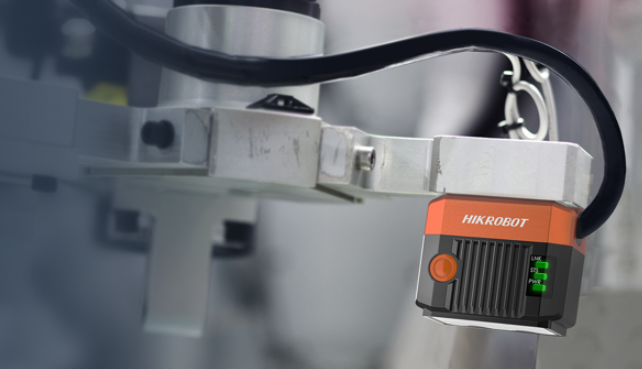
Technical Architecture & Commercial Positioning
Demarcating Vision Sensors (SC1000, SC2000, SC3000) from Smart Cameras (SC5000, SC6000)
In industrial machine vision, clear hardware taxonomy prevents over-engineering and manages capital expenditure. Hikrobot divides its self-contained optical processing hardware into two distinct categories: Vision Sensors (SC1000, SC2000, and SC3000 series) and Smart Cameras (SC5000 and SC6000 series).
| SC1000 Series | SC2000 Series | SC3000 Series |
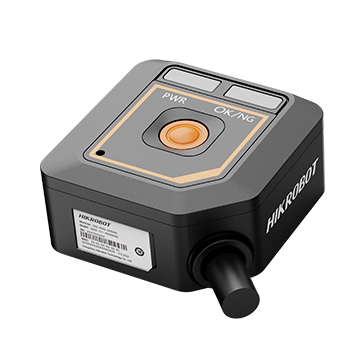 | 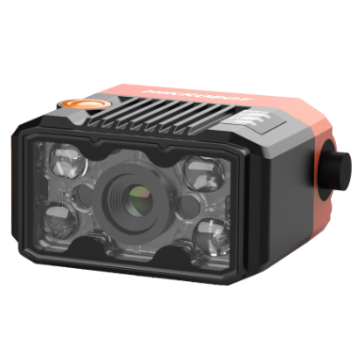 | 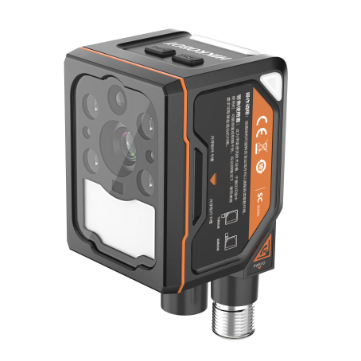 |
Philosophical & Technical Taxonomy
The fundamental difference lies in execution scope, computational architecture, and software flexibility:
- Vision Sensors (SC1000 / SC2000 / SC3000): Engineered as direct, intelligent upgrades to photoelectric or proximity sensors. They perform deterministic, highly optimized single-task or limited multi-tool inspections (e.g., presence/absence, orientation, basic alignment, code reading). They utilize lightweight MCU or lean SoC platforms with embedded light-weight firmware, executing localized rule-based toolsets in ultra-fast cycle times without the thermal or memory overhead of full operating systems.
- Smart Cameras (SC5000 / SC6000): Positioned as fully embedded edge-computing platforms. Incorporating high-performance multi-core processors, up to 8 GB RAM, 64 GB onboard eMMC storage, and support for over 140 graphical tools in the VisionMaster (VM) suite, these devices handle complex AI-driven deep learning models, deep OCR, multi-camera synchronization, and continuous high-resolution processing up to 25 MP.
While a Smart Camera acts as a distributed vision computer, a Vision Sensor functions as a task-specific optical instrument optimised for direct PLC integration and rapid setup.
Hardware & Feature Comparison Matrix
| Feature / Series | SC1000 Series | SC2000 Series | SC3000 Series | SC5000 / SC6000 Series |
|---|---|---|---|---|
| Category Class | Basic Vision Sensor | Compact Multipurpose Sensor | Advanced Vision Sensor | Edge AI Smart Camera |
| Primary Focus | Presence / Absence, Triggering | Locating, Counting, Basic Measurement | Multi-Tool Inspection, Code Reading | Deep Learning AI, Surface Defect Analysis |
| Resolution Range | 0.3 MP to 1.3 MP | 0.4 MP to 1.6 MP | 1.6 MP to 5.0 MP | 1.6 MP to 25.0 MP |
| Integrated Optics & Lighting | Fixed Focus, Red/White LED | Adjustable Focus, Integrated Red/White | Modular Lenses, Integrated Multi-Color | High-Power Switchable 4-Color RGBW, External Strobing |
| Algorithm Toolset | Light rule-based verification | Essential VM Toolpack (~10–20 tools) | Mid-tier VM Toolpack (~30–50 tools) | Full VM Toolset (140+ tools, AI Neural Nets) |
| Onboard Memory | Micro-controller flash | Embedded SoC internal RAM | Dedicated system RAM | 8 GB System RAM, 64 GB Storage |
| Target Price Range | £120 – £140 | £300 – £330 | £900 – £1100 | £1800 – £5000 |
Deep Dive: The Vision Sensor Lineup
1. SC1000 Series: Ultra-Low-Cost Optical Verification
The SC1000 series is designed as an entry point for replacing unreliable photoelectric sensors. At a price point between £120 and £140, it provides visual verification capabilities at the cost of traditional discrete hardware sensors.
- Key Technical Attributes: Compact physical profile (IP67 sealed housing), fixed-focal length lens options, built-in light ring, opto-isolated I/O for direct connection to PLC inputs.
- Core Algorithms: Pattern contrast verification, edge counting, brightness checking, pixel count thresholds.
- Ideal Use Cases:
- Verifying bottle cap presence on beverage lines.
- Detecting insertion of rubber seals in automotive assemblies.
- Validating carton flap closure before taping.
2. SC2000 Series: Versatile Multipurpose Inspection
Stepping up to the £300 to £330 price range, the SC2000 series introduces higher image resolutions and variable optics. It targets applications requiring basic geometric locators, feature detection, and object counts.
- Key Technical Attributes: Manual/adjustable focus rings, improved low-light CMOS sensors, onboard WebGUI or simplified VisionMaster configuration via Ethernet, integrated standard industrial fieldbus communication.
- Core Algorithms: Circle/line detection, shape matching, blob analysis, edge-to-edge distance measurement, basic 1D/2D code identification.
- Ideal Use Cases:
- Checking IC chip pin alignment and orientation on PCB transport rails.
- Counting medical vials inside a secondary packaging tray.
- Detecting orientation notches on machined metal parts prior to robotic picking.
3. SC3000 Series: High-Performance Vision Sensing
Occupying the £900 to £1100 tier, the SC3000 series bridges the gap between basic visual sensing and high-end smart cameras. It is designed for low-power, targeted multi-tool executions where high image quality and broader communication capabilities are required.
- Key Technical Attributes: Resolutions up to 5 MP, C-mount or integrated lens caps, enhanced illumination control, complete integration into industrial Ethernet networks (PROFINET, EtherNet/IP, Modbus TCP).
- Core Algorithms: Advanced contour location, multi-code reading (QR, DataMatrix, Barcodes), OCR character reading, multi-region defect checks, edge pitch measurement.
- Ideal Use Cases:
- Verifying expiry date print presence and reading batch text on pharmaceutical cartons.
- Validating multi-point assembly completeness on consumer electronics frames.
- High-speed sorting of logistics items based on 1D/2D code routing.
Industrial Application Scenarios
Scenario A: High-Speed Beverage Bottling Line (SC1000)
- Problem: Traditional optical proximity sensors struggle to detect transparent PET bottle caps at line speeds exceeding 600 bottles per minute.
- Solution: An SC1000 sensor is mounted directly above the capper wheel. Using a simple brightness/contrast verification region, it detects missing or misaligned caps within a 12 ms cycle time, sending an immediate trigger pulse to an air-eject cylinder via local digital output.
Scenario B: Automotive Stamping Component Alignment (SC2000)
- Problem: Robotic grippers require part offset measurements ($X, Y, \theta$) to correctly pick stamped metal sheets from a rack, but budget constraints rule out high-cost smart camera platforms.
- Solution: An SC2000 unit uses its shape-matching tool to locate reference holes on the stamped sheet. It calculates positional offsets relative to baseline coordinates and transmits correction data via Modbus TCP directly to the robot controller within 35 ms.
Scenario C: FMCG Packaging Quality Verification (SC3000)
- Problem: A secondary food packaging line requires concurrent verification of code legibility, tray seal presence, and box flap closure on a single conveyor line.
- Solution: The SC3000 executes a low-power single-pass toolchain combining 2D DataMatrix reading, a line-measurement tool for flap positioning, and a blob tool for adhesive verification. The compact unit integrates via PROFINET into the line’s main Siemens S7-1500 PLC.
Value Proposition
By structuring their vision lineup around defined processing tiers, Hikrobot offers targeted options for automated quality control:
- SC1000 (£120 – £140): Offers visual presence/absence detection at the price point of standard photoelectric sensors.
- SC2000 (£300 – £330): Delivers flexible geometric locating, counting, and basic measurements at an accessible entry-level price.
- SC3000 (£900 – £1100): Provides multi-tool inspection, code reading, and industrial fieldbus connectivity at a fraction of the cost of dedicated edge-AI smart cameras.
This combination of low acquisition cost, low power draw, direct fieldbus integration, and fast deployment makes the Hikrobot SC1000, SC2000, and SC3000 series a highly cost-effective and capable range of vision sensors for industrial automation.
For technical inquiries, lens evaluations, or loan unit arrangements across the UK and Ireland, contact the smartcameras.ai/ engineering team at techsupport@smartcameras.ai.